INSIGHTS

Home > Criminal Defense > Understanding the Protections of the Fifth Amendment

Understanding the Protections of the Fifth Amendment

by | Dec 28, 2023

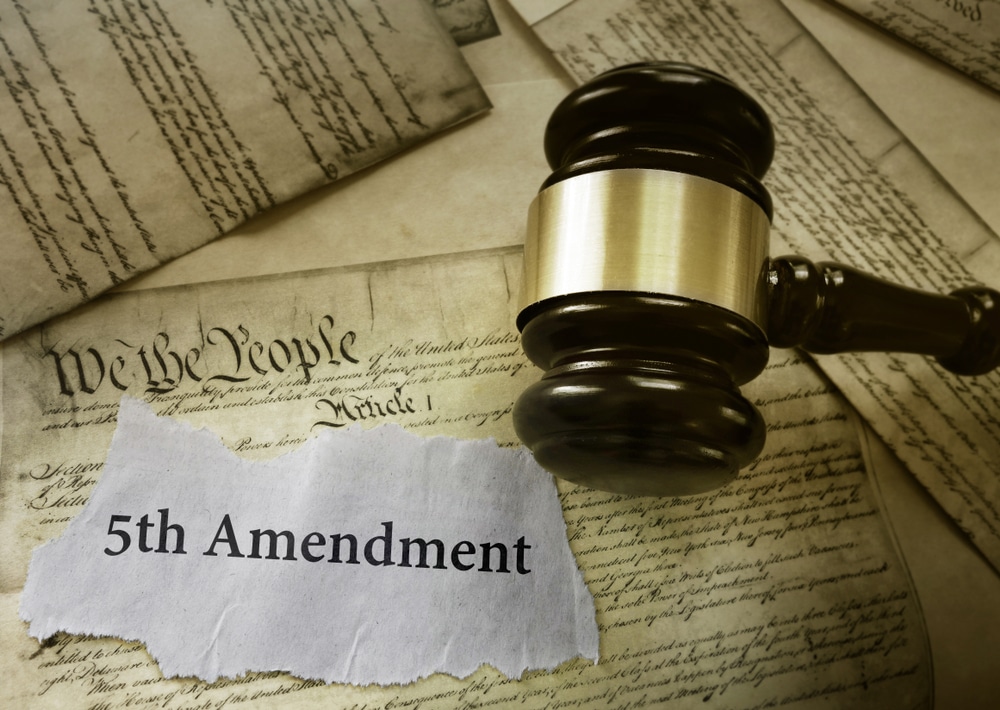
Under the United States Constitution, an individual who has been accused of a crime is protected from self-incrimination. Commonly referred to as “the right to remain silent,” the Fifth Amendment guarantees that a person cannot be compelled by the government to provide information that might suggest their involvement in a criminal act. However, it’s important to understand when you can invoke the Fifth Amendment — and what it means to do so.          

When Can the Fifth Amendment Be Invoked?

Whether you are innocent or guilty, the Fifth Amendment allows you to refuse to testify against yourself at trial. In fact, a jury in a criminal matter must be instructed that they are not permitted to draw adverse conclusions if you choose not to testify in your case. This right also applies outside a criminal courtroom and can be invoked in certain situations involving interactions with law enforcement. 

The Fifth Amendment applies at any time you might make a statement that could be used to incriminate you. For instance, it can come into play at traffic stops, during police interrogations, at grand jury proceedings, and at the time of an arrest. Specifically, you can only “plead the Fifth” in response to a compelled communication — the communication must also be testimonial in nature and relate to express or implied assertions. In addition, the testimony must be self-incriminating and provide information that would be needed to prosecute you for a crime.           

There is no specific language that must be used to invoke the Fifth Amendment. Nevertheless, this right must be raised in a timely manner so that it is not inadvertently waived. The right must also be asserted in response to every question that is posed. A blanket statement is not considered sufficient and would be ineffective.  

What Other Protections Does the Fifth Amendment Offer?

The Fifth Amendment of the U.S. Constitution created several different rights for individuals in connection with limiting government power. In addition to safeguarding a person from self-incrimination, the Fifth Amendment also offers a number of other protections to individuals, including the following rights: 

  • The right to a jury trial — The Constitution guarantees the right to a jury trial to individuals who have been charged with a capital “or otherwise infamous crime.” In other words, a person charged with a felony offense in New York must be indicted by a grand jury. 
  • Protection against double jeopardy — The Fifth Amendment protects individuals from being put in “double jeopardy.” This means they cannot be punished more than once for the same crime. 
  • The right to a fair trial — Criminal defendants are given the right to a fair trial under the Fifth Amendment. A fair trial is one that is conducted justly, by an impartial judge. 
  • Due process — Under the Fifth Amendment, no one shall be “deprived of life, liberty or property without due process of law.” In other words, a person cannot be denied their freedom without having their day in court.  


If you believe that any of your Fifth Amendment rights may have been violated, it’s essential to consult with a criminal defense attorney who possesses the skill and knowledge necessary to protect them.  

Contact an Experienced New York Criminal Defense Attorney

If you’ve been charged with a criminal offense, it’s best to have a knowledgeable criminal defense attorney by your side who can protect your Constitutional rights. Offering adept advocacy and relentless representation, the criminal defense attorneys at D’Emilia Law know what it takes to create a strong defense strategy to achieve the best possible results in your case. To schedule a consultation to learn how we can help, contact us at 1-888-DEMILIA.
Fifth Amendment
D'Emilia Law Represents NYC High School Principal Charged with Sexual Abuse cover

D’Emilia Law Represents NYC High School Principal Charged with Sexual Abuse

D’Emilia Law is representing a long-time Queens high school principal charged with forcible touching and five counts of sexual abuse in the third degree. The allegations were brought by two assistant principals at the school, both of whom also maintain a friendship...
D’Emilia Law Represents High School Principal Accused of Forcible Touching cover

D’Emilia Law Represents High School Principal Accused of Forcible Touching

D’Emilia law is representing a Queens high school principal who was arrested on charges of forcible touching and sexual abuse in the third degree. The 66 year old was accused by two female teachers at the school, who alleged that five separate incidents of touching...
D'Emilia Law Represents Man Charged with Assault at Liberty Game cover

D’Emilia Law Represents Man Charged with Assault at Liberty Game

D’Emilia Law is representing a man charged with two counts of assault for throwing an obscene object during a New York Liberty and Dallas Wings basketball game at the Barclays Center in August. The 32 year old Ohio man faces two felony charges of assault for allegedly...
Five Things to Know About DWIs in New York cover

Five Things to Know About DWIs in New York

Driving while intoxicated is a serious offense that can carry severe penalties, including jail time, monetary fines, and license revocation. Since the circumstances surrounding every case are unique, DWIs can be complex. While a knowledgeable attorney can best advise...
D’Emilia Law Represents Defendant in NYC Subway Stabbing Case cover

D’Emilia Law Represents Defendant in NYC Subway Stabbing Case

D’Emilia Law is representing a 30 year old man in connection with a subway stabbing incident in Grand Central Station involving two other individuals, which occurred in June. The individual was arraigned on charges of attempted murder, assault, and attempted assault....
DWI Frequently Asked Questions cover

DWI Frequently Asked Questions

Being arrested for drinking and driving can be stressful — and navigating the legal process can be particularly overwhelming if you are unfamiliar with it. If you’re facing DWI charges, you likely have many questions about the potential consequences and penalties. The...
Constructive Possession

Understanding Constructive Possession in Drug Cases

There are two types of possession in New York drug crimes — actual and constructive. Significantly, constructive possession is an alternative theory to actual possession that allows a person to be charged with a drug-related offense, even if they did not have the...
What are Mitigating Factors in DWI Sentencing? cover

What are Mitigating Factors in DWI Sentencing?

If you’ve been convicted of a DWI, a judge will consider both aggravating and mitigating factors when determining your sentence. Mitigating factors are circumstances that can reduce your level of culpability — and lessen the penalties that might be imposed. It’s...
Ignition Interlock Device

What Happens if You Violate the Ignition Interlock Device Requirements?

If you were required to install an ignition interlock device (IID) in your vehicle in connection with a DWI, it’s crucial to comply with the court order. Violating an IID mandate is a serious matter that can be charged as a misdemeanor offense, resulting in jail time...
How Can an Expert Witness Help in My DWI Case? cover

How Can an Expert Witness Help in My DWI Case?

Being convicted of a DWI is a serious matter that can come with significant repercussions — and it’s crucial to mount a solid defense. If your DWI case will be going to trial, your criminal defense attorney might want to bring in an expert witness as part of your...